Scan a receipt instead of typing it

You can now photograph a supplier receipt, or upload a PDF, and let Masto Control propose the receipt for you: the supplier, number, date, VAT, the goods, and the delivery charge or discount at the bottom.

Each line is matched to a material or a tool you already have, even when the receipt is in another language, and the names are translated into yours. Packs are worked out for you (two packs of 3 kg of wax comes out as 6 kg), and anything that does not exist yet can be created on the spot. Nothing is saved until you have checked the draft.
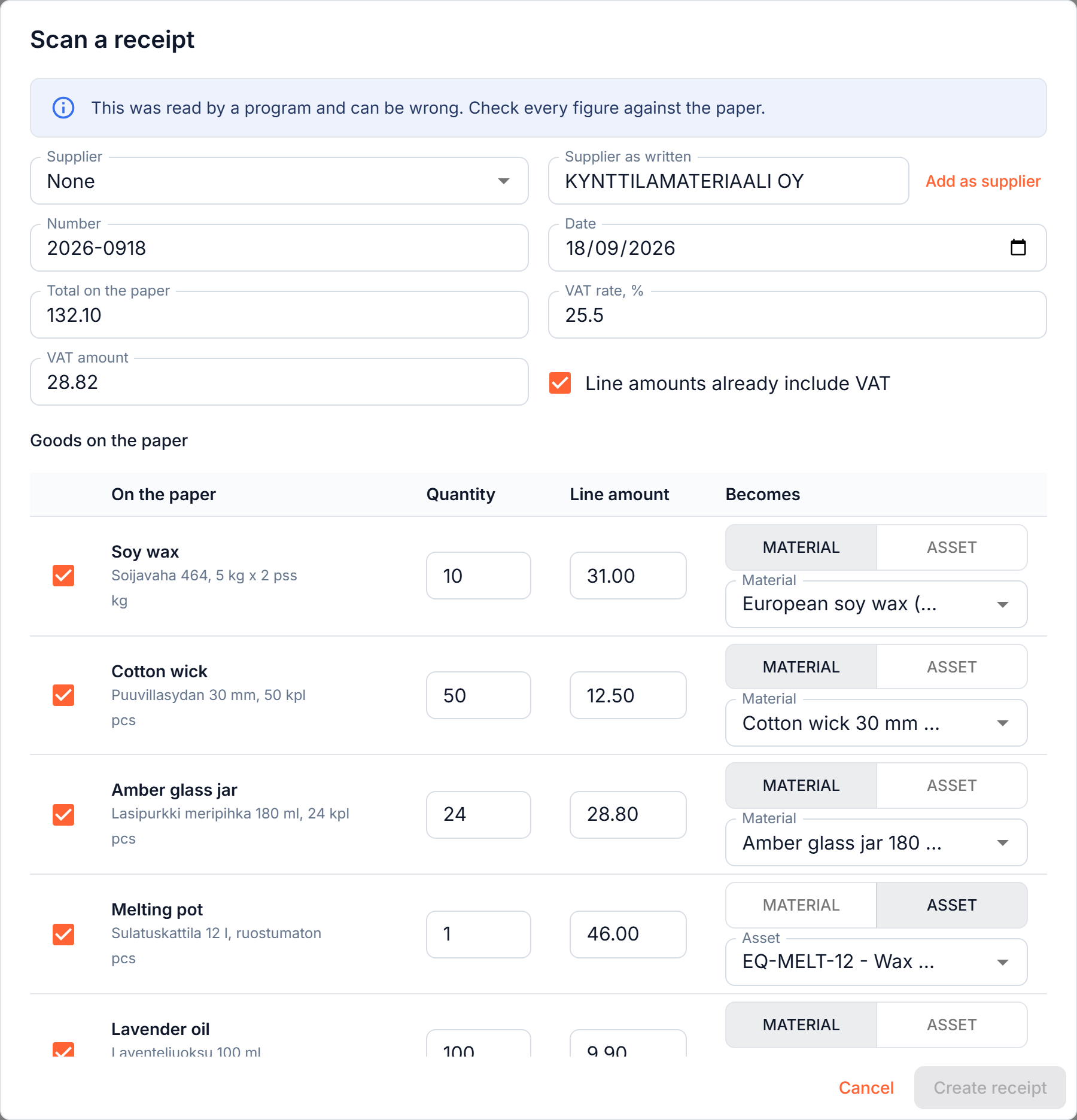
The scan dialog: a Finnish receipt read into a draft, each line matched to a material or a tool

Included in every plan, up to 10 scans per workspace per day. How it works
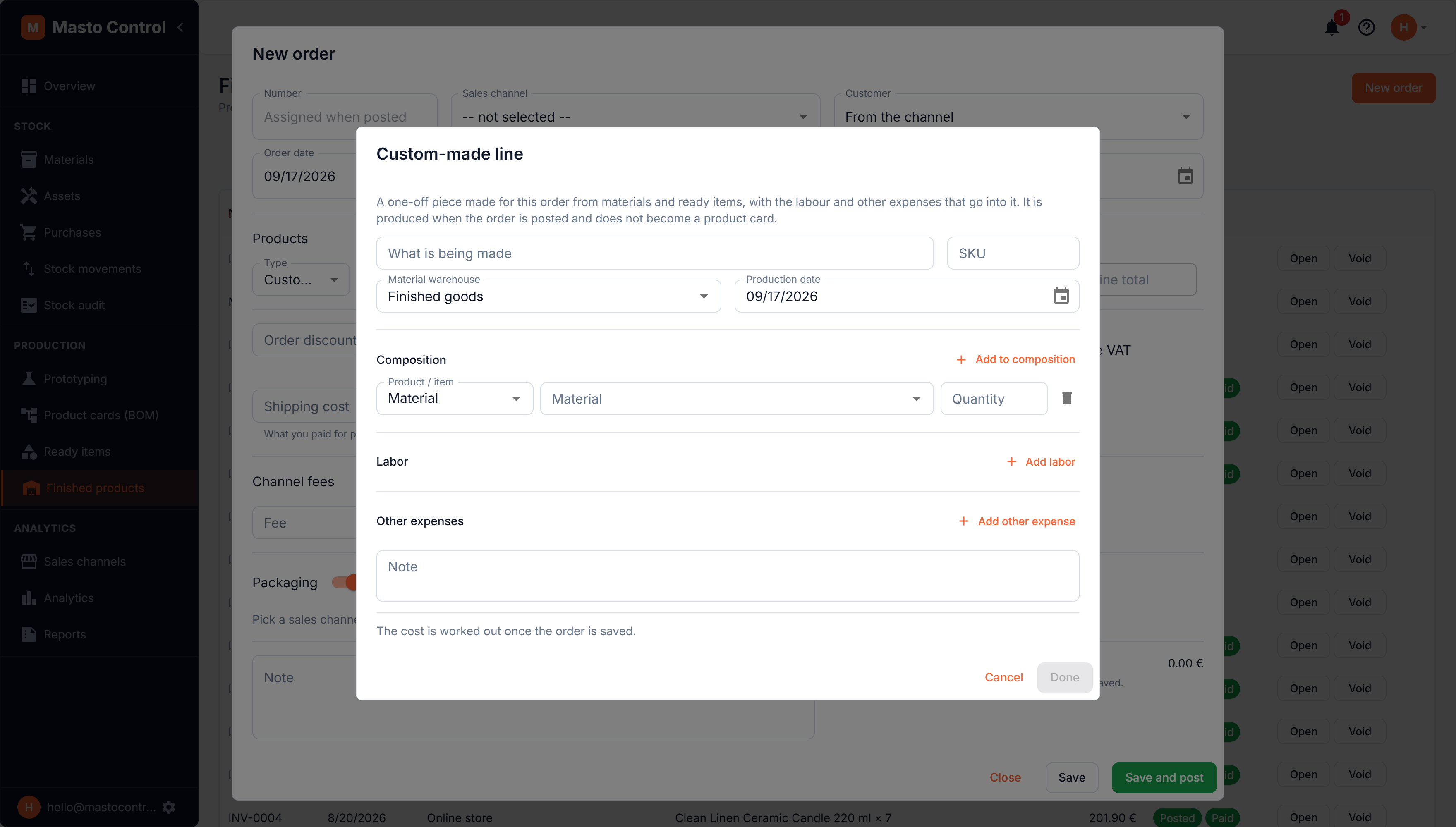
Custom-made work on a sales order

A customer asks for something you do not make: a wedding set, a gift box, a one-off colour. You can now add it as a custom-made line right on a sales order. Describe what goes into it (materials and ready items), and it is costed and taken out of stock when you post the order, without creating a product card you will never use again.

The separate "custom order" button is gone: it is now simply a line type on New order.

A custom-made line on a sales order

Custom-made lines

Finnish and Swedish

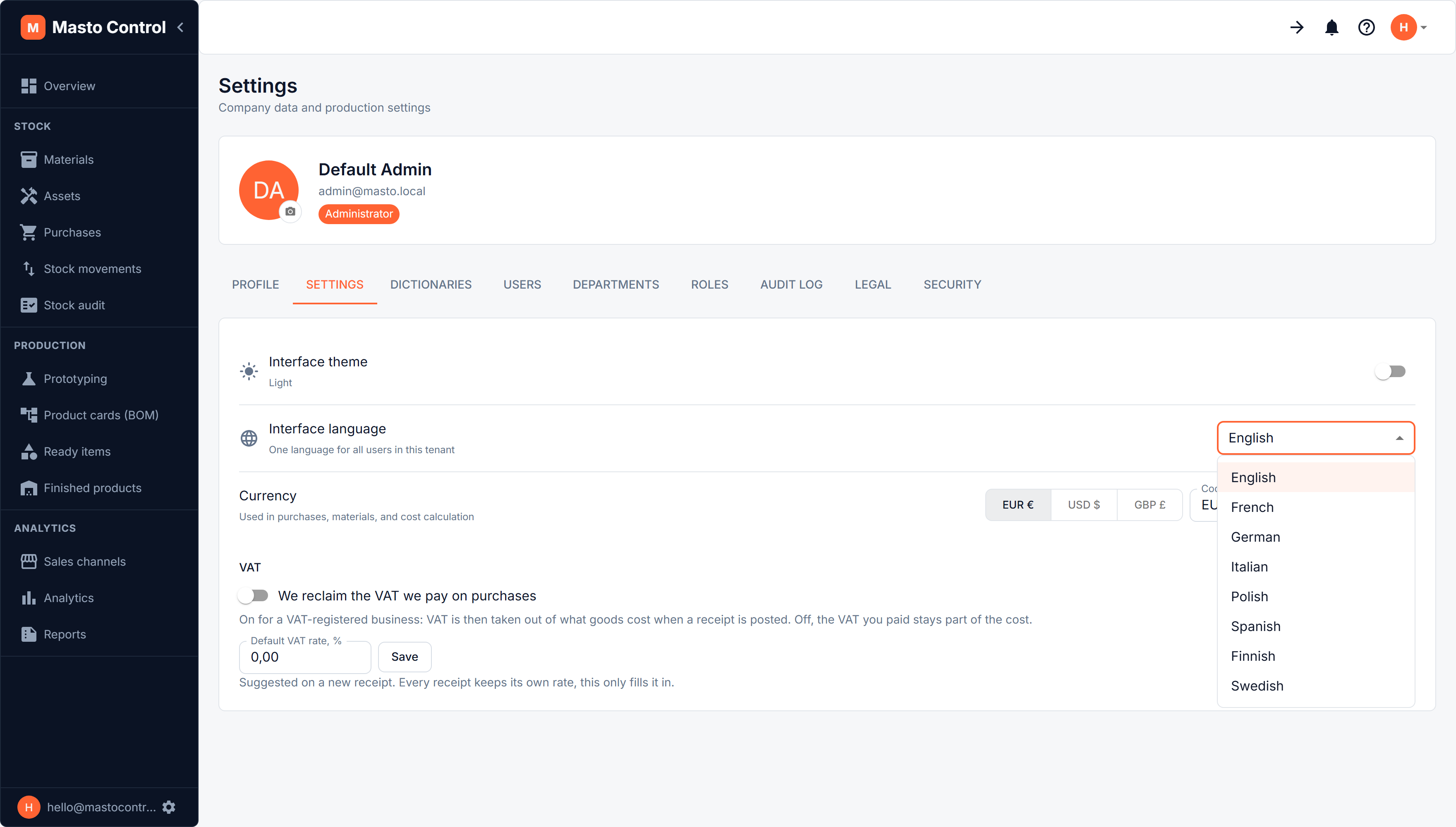
Masto Control now speaks eight languages: the interface can be set to Finnish (Suomi) or Swedish (Svenska) as well as English, French, German, Italian, Polish and Spanish. An admin chooses it for the whole workspace under Profile, Settings, Interface language.

The Finnish and Swedish wording is new; if something reads oddly, tell us at hello@mastocontrol.com.

The interface language list with eight languages

Interface language

Two-factor authentication

You can now protect your account with a second step at sign-in: after your password, Masto Control asks for a six-digit code from an authenticator app on your phone. Anyone who learns your password still cannot get in without that phone.

It is optional and set per account, so turning it on for yourself does not change how your colleagues sign in. Any standard authenticator app works, including Google Authenticator and Microsoft Authenticator.

Setting up two-factor authentication with a QR code

Two-factor authentication

Reports a bookkeeper can use

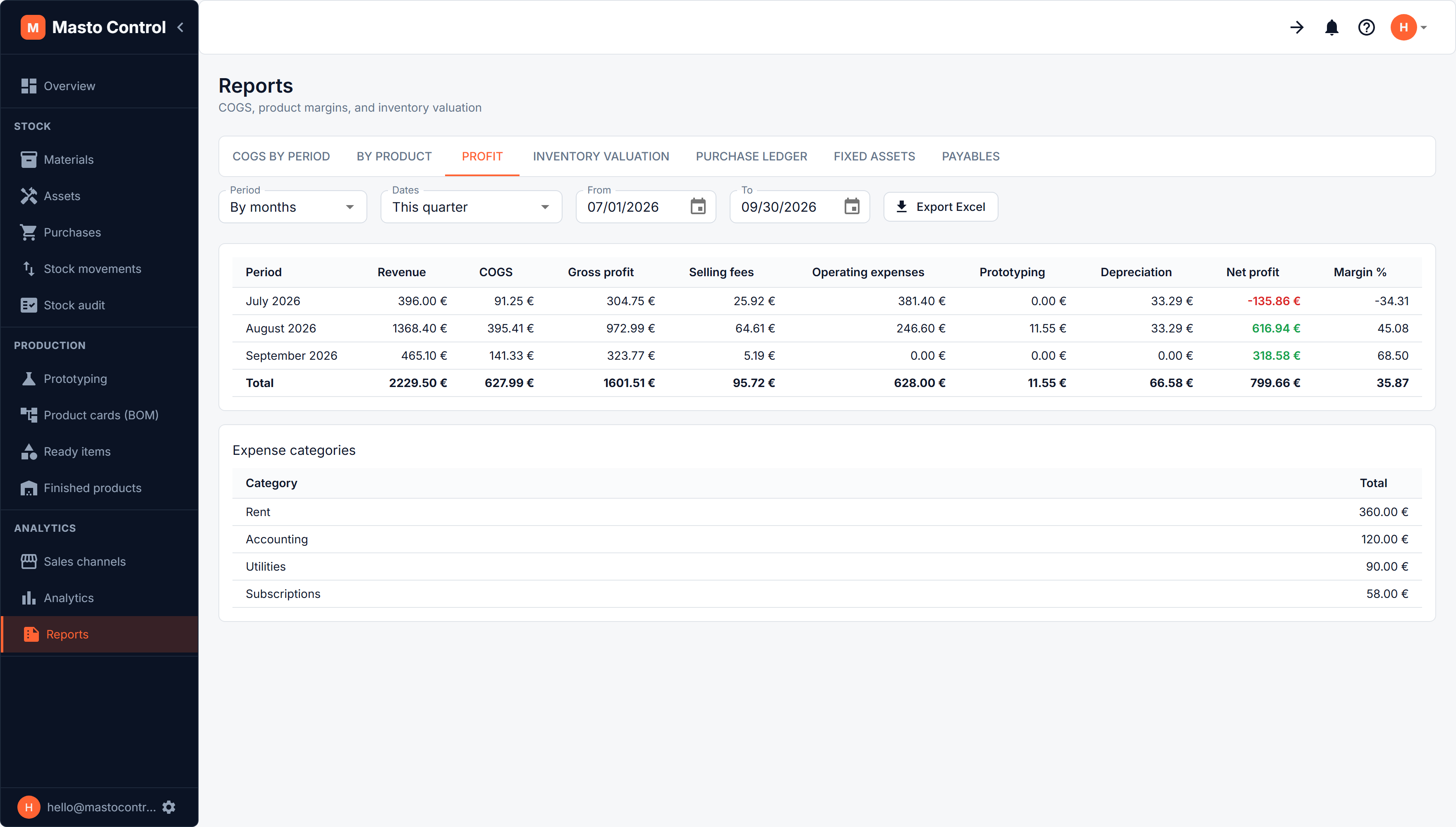
Reports now covers the questions an accountant asks, not only the ones a maker asks: a Profit report from revenue down to net profit, inventory valuation as of a date you choose, a purchase ledger split into stock, tools and expenses, a fixed-asset register with depreciation, and payables by age. Later additions are the sales ledger and receivables.

Every report exports to Excel.

The Profit report: revenue, cost of goods, expenses and depreciation down to net profit

Reports

Prototyping

Before something is a product it is an idea, and finding out whether it works costs real wax. Prototyping is where those ideas live: a recipe without the commercial half (no packaging, no channel prices), the samples you actually poured, and what every attempt cost.

When an idea works you promote it to a product card; when it does not, you reject it and the cost is still on record.

The prototypes list, with the samples made from one of them

Prototyping

Tools and equipment that wear out

A melter, a bench scale, a label printer: things you own and keep are not stock, and now they are not treated like it. Each item has its own record under Assets: what it cost, how much it has depreciated, what it is worth now, and, when it finally goes, why.

Depreciation is straight-line and charged monthly. One button catches every item up to the end of last month, and a month is never charged twice. A tool bought on the same receipt as your materials becomes an asset rather than stock.

The assets list: what each kind cost, what it has depreciated and what it is worth now

Tools and equipment